7 Best MillionVerifier Alternatives in 2026 (Cheaper & Just as Accurate)
October 10, 2026
Quick answer
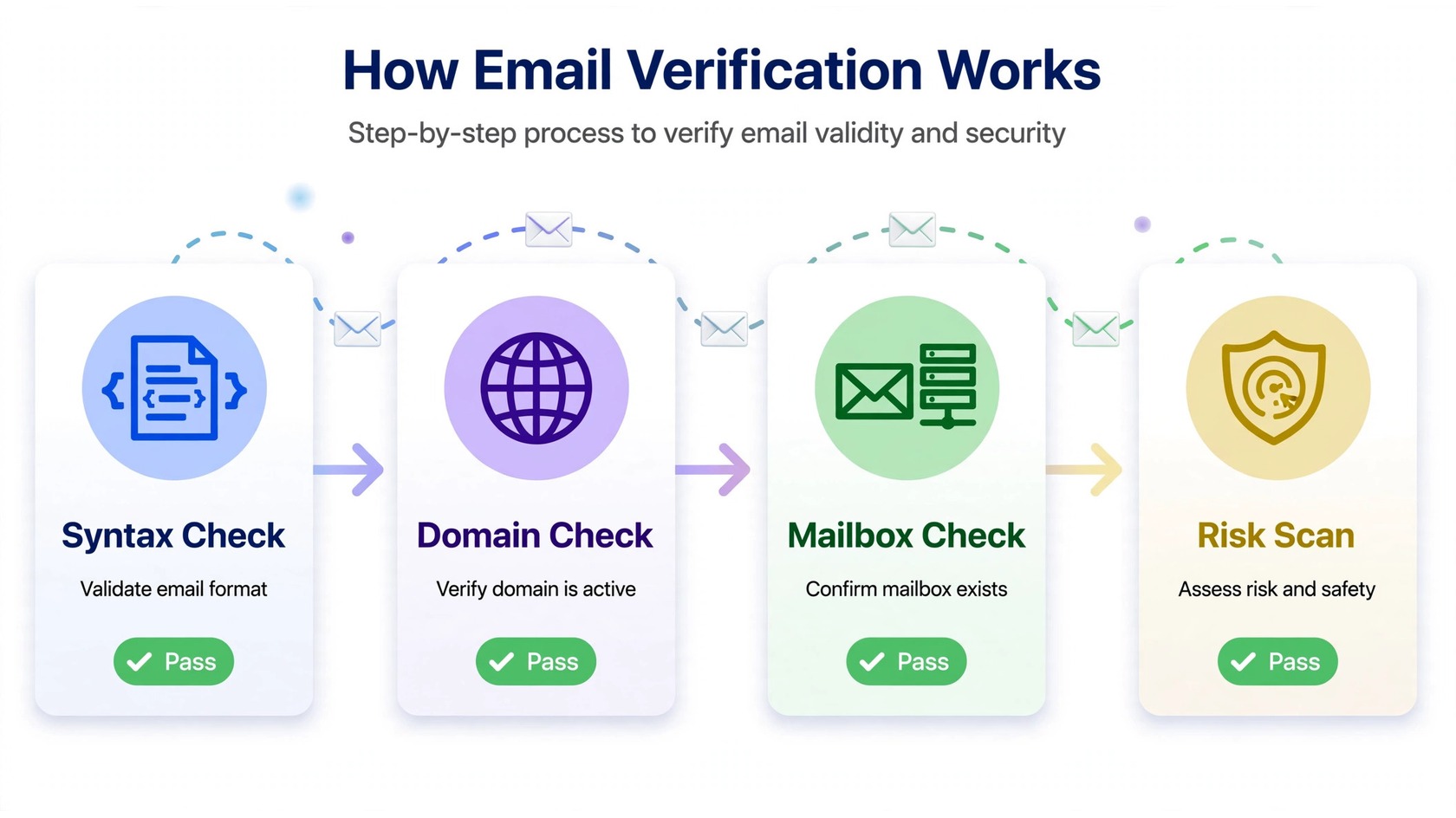
Looking for a MillionVerifier alternative? You have good options. MillionVerifier built its name on budget-friendly bulk verification, but plenty of rival tools now match its core checks, syntax, domain, mailbox existence, and risky-address detection, while adding stronger accuracy, better APIs, clearer pricing, or free tiers for testing.
In this guide we compare 7 alternatives side by side, explain what separates them from MillionVerifier, and show how to switch without disrupting your sending.
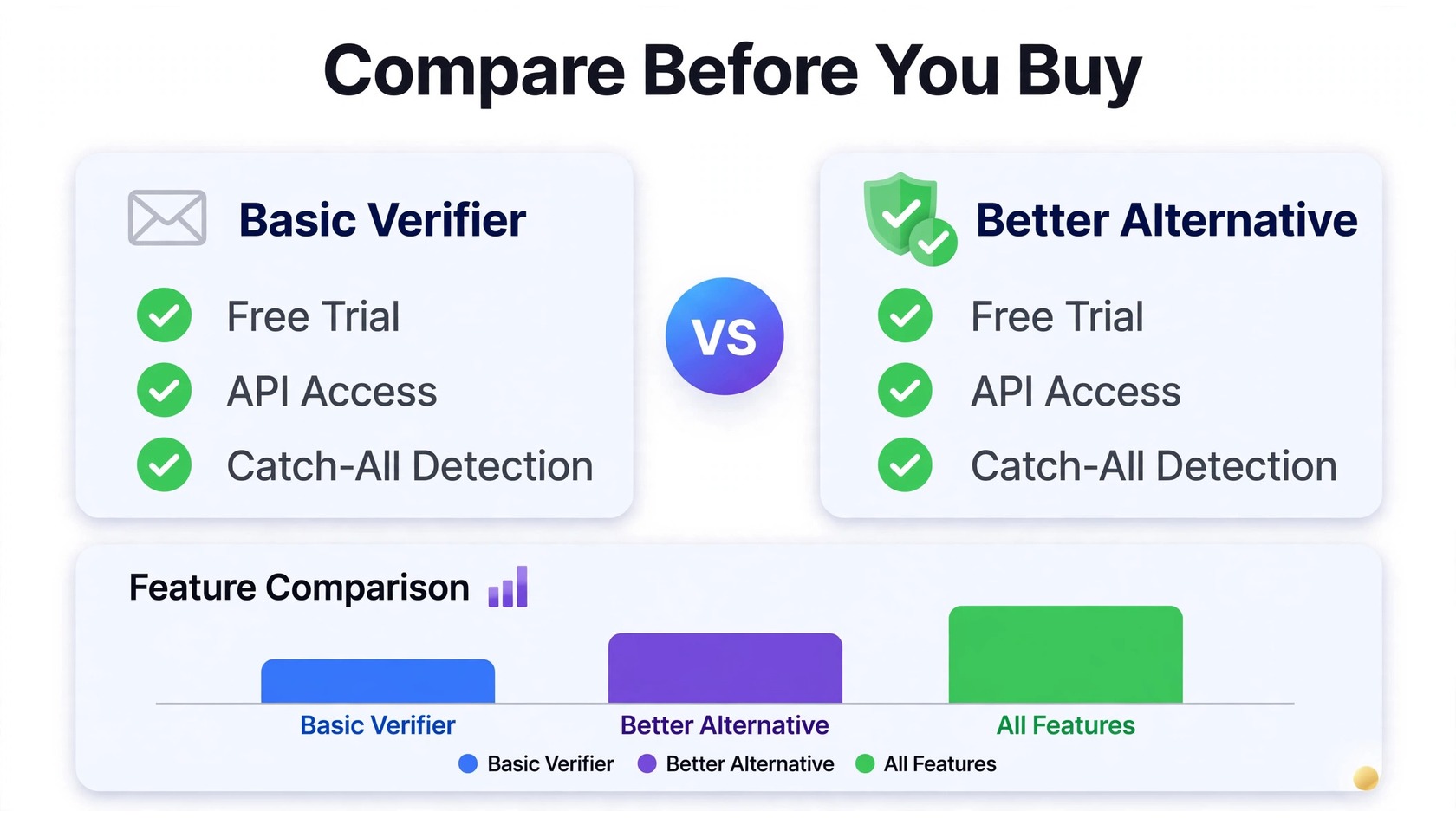
Why look for a MillionVerifier alternative?
MillionVerifier is a solid budget tool, but “budget” isn’t everyone’s priority. Here are the most common reasons teams switch:
- They want a simpler workflow. Cleaner dashboards, faster bulk processing, or one-click integrations with tools you already use.
- They need real-time verification. A well-documented API can block bad addresses at signup, before they ever pollute your list.
- They hit integration limits. CRMs, ESPs, and sales tools plug into different verifiers natively, the best MillionVerifier alternative is often just the one that connects to your setup.
- They want bundled extras. Some rivals bundle email finding, inbox placement testing, or deliverability monitoring alongside verification.
- They want straightforward support. Responsive human support beats a help center when results look off.
MillionVerifier remains one of the most affordable ways to clean a list, but email verification is a commodity feature, and the details (support, UX, integrations, expiry policies) are what separate the tools.
What MillionVerifier does well (and where it falls short)
To judge any MillionVerifier alternative fairly, it helps to know the baseline. MillionVerifier’s pitch is simple: affordable pay-as-you-go verification with a free tier for testing on a real sample before paying. Its interface is functional rather than flashy, and it covers the essentials, syntax checks, domain checks, disposable detection, and catch-all identification.
Where it falls short depends on your use case. Independent comparisons note a smaller integration library than premium rivals, leaner reporting, and weaker accuracy on tricky categories like catch-all domains. If none of that bothers you, there’s no urgent reason to switch, but if any of it does, the seven tools below are worth a look. Visit MillionVerifier’s official site to see their current offering first.
How we compared the 7 MillionVerifier alternatives
We didn’t crown a winner on price alone, a cheap verifier that misses risky addresses costs more in bounce damage than it saves. We compared each tool on five factors, informed by independent hands-on roundups like Sender.net’s 2026 tested comparison and Mailercloud’s 2026 service roundup:
- Verification depth: syntax, domain/MX, live mailbox checks, plus risky-address detection (disposable, catch-all, role-based).
- Ease of testing: whether you can try the tool on a real sample list before paying, free tiers and no-card trials matter here.
- Credit policies: whether pay-as-you-go credits expire, and whether you’re charged for inconclusive (“unknown”) results.
- Workflow fit: bulk upload limits, real-time API quality, and native integrations with popular CRMs and ESPs.
- Pricing transparency: a clearly published pricing page versus a quote-only maze. Prices change often, so always confirm on the vendor’s official page.
One note: verification and validation aren’t the same thing. Basic validation checks formatting and domain records; full verification goes deeper. Every tool below does full verification.
The 7 best MillionVerifier alternatives in 2026
| Tool | Free tier | Credits expire? | Best for |
|---|---|---|---|
| PureListVerifier | Available | Check plan terms | Simple, dependable verification without bloat |
| ZeroBounce | Available | Check plan terms | Bundled deliverability extras |
| NeverBounce | Trial available | Check plan terms | CRM auto-sync and integrations |
| Bouncer | Available | Never (pay-as-you-go) | Accuracy-first buyers and EU teams |
| Emailable | Generous | Never (pay-as-you-go) | First-time users and occasional verifiers |
| DeBounce | Available | Check plan terms | Startups watching the budget |
| EmailListVerify | Available | Check plan terms | High-speed bulk cleaning on a budget |
Mini-reviews: what each MillionVerifier alternative does well
1. PureListVerifier, the straightforward alternative
PureListVerifier keeps verification refreshingly simple: upload your list, get clean verdicts on each address, and download a list that’s safe to send to. No bloated marketing suite, no pricing maze, just a focused credit system for bulk and real-time checks. It flags invalid, disposable, catch-all, and risky addresses, and the whole workflow takes minutes, no training sessions. If your complaint about MillionVerifier is the clunky experience rather than the price, start here. See PureListVerifier’s pricing for current plans.
2. ZeroBounce, the deliverability bundle
ZeroBounce is the biggest name in the space, and it competes as a full deliverability platform rather than just a verifier. Alongside verification you get inbox placement testing, blacklist monitoring, DMARC monitoring, and an email finder under one login. That bundle costs more, but it’s genuine value if you’d buy those features anyway. See ZeroBounce’s official site for details. Our ZeroBounce alternatives guide covers cheaper ways to get the same core checks.
3. NeverBounce, the integration king
Owned by ZoomInfo, NeverBounce is built around keeping connected systems clean rather than one-off uploads. Its standout is scheduled auto-sync: connect your CRM or ESP once, and new contacts get verified as they arrive with nobody remembering to export anything. It also offers typo correction and a broad library of native integrations. If MillionVerifier’s small integration list is your pain point, NeverBounce solves it. Compare options in our NeverBounce alternatives roundup.
4. Bouncer, accuracy-first with non-expiring credits
Bouncer consistently ranks near the top of independent accuracy tests, and its pay-as-you-go credits never expire, ideal for seasonal senders who verify in bursts. It adds a toxicity check flagging addresses linked to spam traps and known complainers, technically “valid” but dangerous to mail. EU data hosting plus SOC 2 and GDPR compliance make it an easy pick for European teams with vendor questionnaires to pass. It’s typically pricier per email, but non-expiring credits make it cheaper in practice for seasonal senders.
5. Emailable, the easiest to use
Emailable’s reputation rests on simplicity: a clean dashboard, one credit type across bulk/API/widget verification, and one of the most generous free tiers in the industry. It doesn’t charge for “unknown” or duplicate addresses, a quiet saving on messy lists with lots of corporate catch-alls. Scheduled monitoring keeps connected lists clean weekly without manual uploads. Ideal if you verify occasionally, hate pricing mazes, and want a tool anyone on the team can use without training.
6. DeBounce, startup-friendly pricing
DeBounce is built for startups: low entry pricing, a modern interface, and the essentials covered, syntax, domain/MX, disposable detection, plus real-time API access included rather than gated behind add-ons. It’s a sensible swap when budget is the primary constraint and you want a more polished experience without a higher tier. As with any budget tool, test accuracy on your own data before migrating a production list.
7. EmailListVerify, the raw price fighter
EmailListVerify is one of the few tools that can undercut MillionVerifier on headline price, with fast bulk processing aimed at high-volume list cleaning. It also bundles a free deliverability toolkit (blacklist checker, MX lookup, DMARC/SPF helpers). The trade-offs are a dated interface and fewer native integrations than premium rivals. For agencies cleaning client lists at scale, it’s a strong budget alternative. We compared it head-to-head in our PureListVerifier vs EmailListVerify breakdown.
How to switch from MillionVerifier without losing data: 6-step checklist
- Export your verification history. Before canceling anything, download your past results and suppression lists so you don’t re-verify (and re-pay for) the same addresses.
- Test two contenders with the same sample. Run a 500-address slice containing known-bad addresses through each alternative’s free tier and compare catch rates, real data beats marketing claims.
- Check catch-all and spam-trap handling. Ask how each tool classifies catch-all domains and whether it detects spam traps. Weak detection here is how senders get blocklisted, and one blocklisting incident costs more than a year of verification.
- Map your integrations. List every CRM, ESP, and form your addresses flow through, and confirm a native connector or workable API path exists.
- Verify the API behavior. If you gate signups in real time, test the API’s response speed and result codes on staging before pointing production traffic at it.
- Re-verify on a schedule. Plan a full re-verification every few months and protect new signups in real time, whichever tool you choose.
Switching is also a good moment to fix the habits that dirty your list in the first place. Double opt-in keeps bad addresses off at signup, and watching your domain and IP reputation catches deliverability drift early. If bounces started this search, our guide on why outreach emails bounce explains the usual culprits.
Pricing reality check: what “cheaper” really means
Headline per-email prices are only part of the story. The true cost of any MillionVerifier alternative is the cost per genuinely clean email, factoring in accuracy, credit expiry, whether you’re charged for unknowns, and whether the API costs extra. A cheaper tool that misses spam traps can be far more expensive once bounce damage hits your sender reputation.
That’s why we recommend testing free tiers rather than trusting price tables alone. Run the same list through two tools, compare how each handles risky categories, and compute the per-clean-email cost at your volume. For more on how verifier pricing structures work, see our cheapest email verification tools guide. And if simplicity plus fair pricing is what you’re after, PureListVerifier’s pricing is published openly with no quote-only games.

FAQs
What is the best MillionVerifier alternative?
It depends on your priority. PureListVerifier is the simplest all-round swap; ZeroBounce adds a full deliverability suite; NeverBounce wins on CRM integrations; Bouncer suits accuracy-first and EU buyers; Emailable is easiest for occasional use; DeBounce and EmailListVerify compete hardest on budget price. Test two with a free tier before committing.
Is there a free MillionVerifier alternative?
No reputable tool offers unlimited free verification, but most include free tiers or no-card trials for testing accuracy on a real sample, usually enough to clean a small list and compare catch rates. Manual spot-check methods exist too, see how to verify an email address without sending, but they don’t scale.
How do I switch from MillionVerifier to another verifier?
Export your results and suppression lists first, run a sample through the new tool’s free tier, map your CRM and ESP integrations, test the API on staging if you verify signups in real time, and only then cancel the old account. The 6-step checklist above covers the full process.
Are cheaper verifiers as accurate as expensive ones?
Often, yes, price and accuracy aren’t strictly linked in this market. The real difference shows up in edge cases: catch-all domains, spam traps, disposable addresses, and reporting depth. Test those categories specifically with each free tier rather than trusting headline claims.
What’s the difference between email verification and validation?
Validation usually means basic technical checks (syntax, domain/MX records), while verification goes deeper with mailbox-level checks plus risky-address detection. Everything on this list does full verification. Our detailed comparison explains when the distinction matters.
Do verification credits expire?
It varies by vendor and plan. Several tools offer pay-as-you-go credits that never expire, a big win for seasonal senders who verify in bursts, while others expire credits after a set period. Read the credit policy on the pricing page before buying, expiry silently raises your true per-email cost.
Can these alternatives verify emails in real time at signup?
Yes, every tool on this list offers a real-time API for checking addresses as they’re submitted on forms. Real-time verification is the cheapest long-term defense against bounces because it stops bad addresses from ever entering your list. Our FAQ covers common integration questions.
The bottom line
The best MillionVerifier alternative fits your workflow, your list size, integrations, and budget pattern, not someone else’s winner. Shortlist two, run the same sample through both free tiers, and let the catch rates and the experience decide. If you want the simplest swap with transparent pricing and no learning curve, try PureListVerifier, upload your list and see how many risky addresses are hiding in it.