Re-engagement Email Examples: 9 Campaigns That Win Back Silent Subscribers
October 12, 2026
Quick answer
Looking for re-engagement email examples that actually win back silent subscribers? The best ones share a simple formula: a clear reason to return, a low-pressure tone, and one obvious action. Below you will find nine proven campaign types, from the classic “we miss you” note to the polite breakup email, each with notes on why it works and when to send it.
Re-engagement matters because inactive subscribers quietly drag down your results. They stop opening, they stop clicking, and mailbox providers notice the silence. A thoughtful win-back sequence can revive a meaningful share of your list while showing you exactly who is worth keeping around.
What Is a Re-engagement Email?
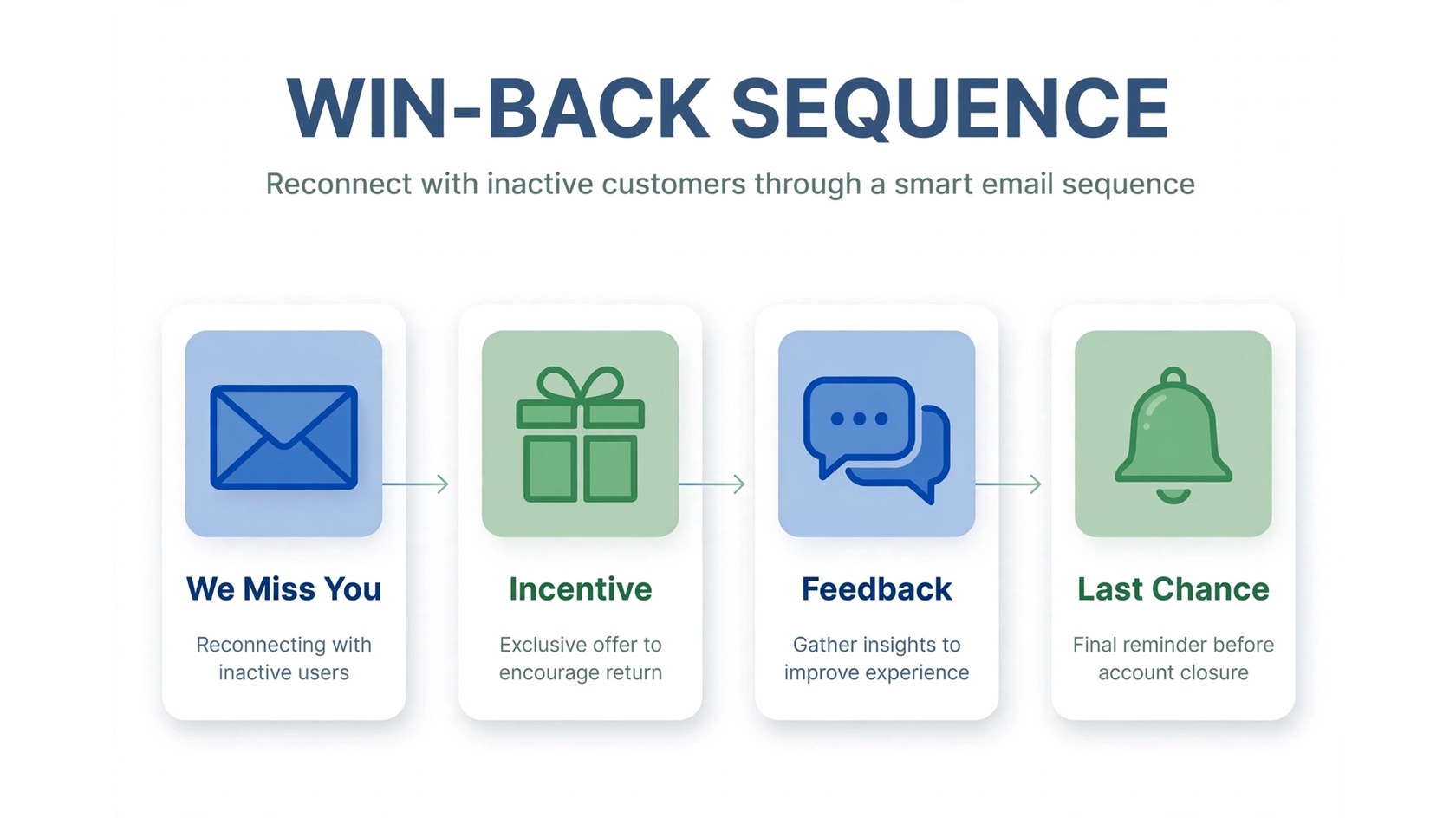
A re-engagement email is any message sent to subscribers who have stopped interacting with your emails. The goal is simple: remind them why they signed up, offer a reason to come back, and give chronic non-openers a graceful way to leave. Most brands trigger these campaigns after 60 to 90 days of no opens or clicks, though the right window depends on how often you send. For a deeper look at the mechanics of getting cold subscribers to open again, read our guide on how to win back subscribers who stopped opening your emails.
9 Re-engagement Email Examples That Win Back Silent Subscribers
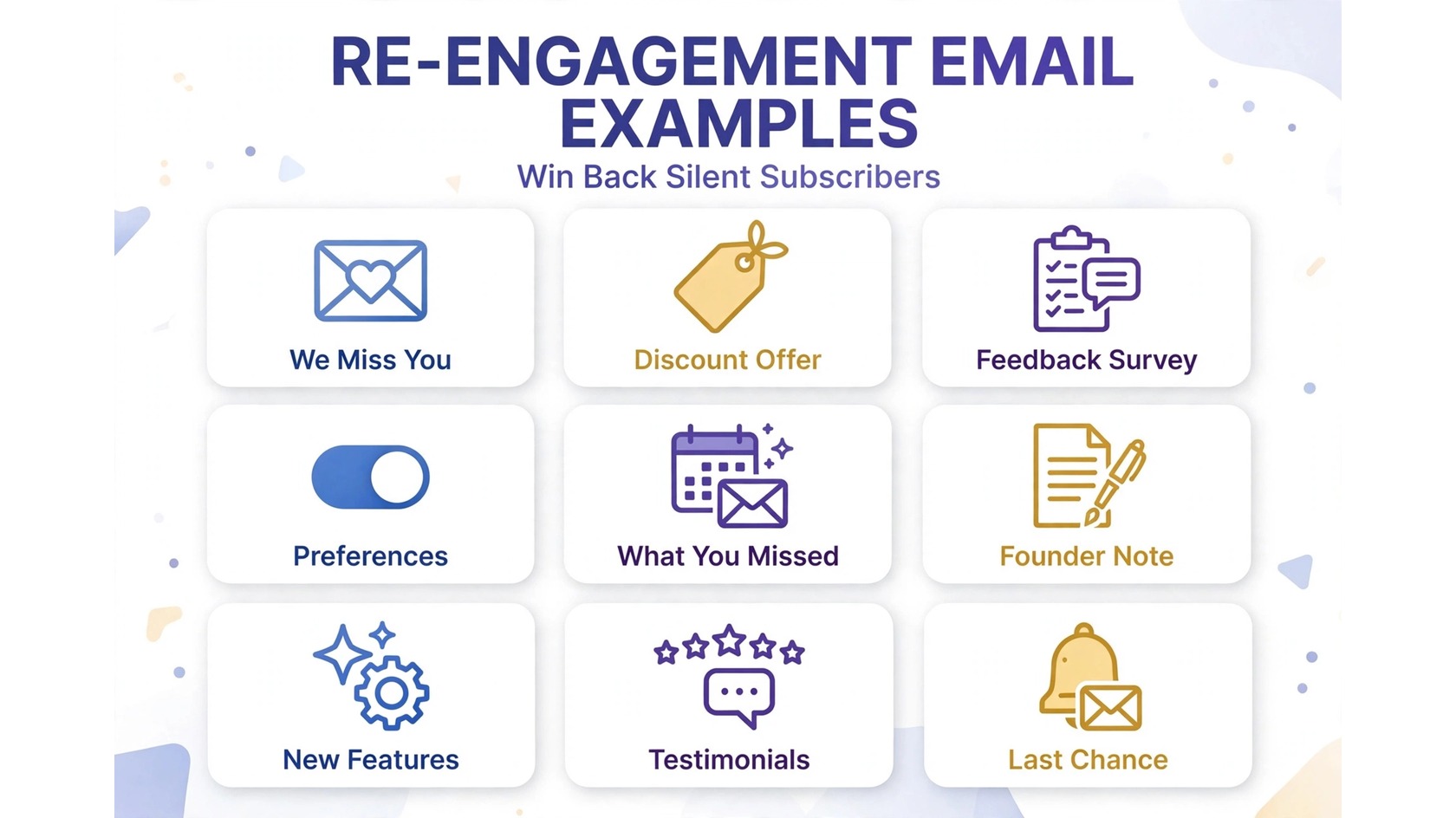
Each example below follows a different psychological trigger. You do not need all nine. Pick the three or four that fit your brand voice, then arrange them into a short sequence. The order matters less than the variety: different angles give different subscribers a reason to bite.
1. The “We Miss You” Email
The simplest re-engagement email of all. Subject lines like “We miss you” or “It’s been a while” work because they are honest and human. Keep the body short: acknowledge the silence, remind them of the value they signed up for, and include one clear call to action. This format works best as the first touch in a win-back sequence, while the relationship is only slightly cold. Avoid guilt-tripping language. A warm, light tone outperforms a scolding one every time.
2. The Discount or Incentive Offer
Nothing reopens wallets like a well-timed incentive. Offer lapsed subscribers a percentage off, free shipping, or an extended trial to lower the barrier to coming back. The key is framing: present it as a welcome-back gift, not a desperate clearance sale. Put the offer in the subject line so it survives the inbox scan, and set a clear expiry date to create gentle urgency. One caution: if you discount too often, subscribers learn to go quiet on purpose and wait for the coupon. Reserve this play for once or twice a year per subscriber.
3. The Feedback Survey (“Tell Us Why You Left”)
Sometimes the best win-back move is to ask a question instead of making a pitch. A short survey, three questions at most, asking why they stopped engaging can surface fixable problems: too many emails, irrelevant content, or a changed role. Keep the survey to one click per question and promise it takes under a minute. Even subscribers who never buy again give you valuable intelligence, and the act of asking shows respect. Share one change you made based on past feedback to prove their answers matter.
4. The Preference Center Update
Many subscribers go silent for a boring reason: they get too much email, or the wrong kind. Instead of guessing, invite them to a preference center where they choose topics and frequency. “Want fewer emails? Pick what matters to you” is a compelling subject line because it hands control back to the reader. This example works especially well for publishers, retailers with many categories, and B2B brands with multiple product lines. Every preference saved is a subscriber who chose to stay, which is the strongest engagement signal you can get.
5. The “Here’s What You Missed” Roundup
FOMO is a legitimate motivator. A curated roundup of your best content, biggest product updates, or most popular items from the past few months reminds silent subscribers what they have been missing. Pick five to seven highlights, add one-line descriptions, and link each to the full piece. Even subscribers who do not click everything may find one item worth their time.
6. The Plain-Text Founder Check-In
Strip away the design. A plain-text email that looks like it came from a real person, ideally the founder or a named team member, cuts through inbox fatigue precisely because it does not look like marketing. Keep it to a few short paragraphs: notice their absence, ask if everything is okay, and offer a direct reply address. No banners, no product grid, no footer maze. The reply-to inbox becomes a goldmine of qualitative feedback, and reply rates on these emails tend to beat designed templates by a wide margin. Authenticity is the whole strategy here, so write like a human, not a brand.
7. The New Feature or Product Update
People who left because your product did not fit may return when it changes. Announce a major feature, a redesign, a new integration, or a pricing change that removes their original objection. Lead with the single biggest improvement, explain who it helps in one sentence, and link to a demo or changelog. This example works best when you can segment: send it to subscribers who churned around the time the limitation existed. Relevance turns an announcement into a personal invitation. If you need a refresher on the vocabulary of launches and rollouts, our email deliverability terms glossary keeps the jargon straight.
8. The Social Proof Showcase
Let your happiest customers do the persuading. A re-engagement email built around two or three short testimonials, review scores, or customer stories borrows credibility you cannot claim yourself. Choose proof that mirrors the silent subscriber: same industry, same use case, same company size. Add photos or first names where you have permission, since faces beat logos for trust. End with a soft call to action, not a hard sell. The message is “people like you are getting value,” which reframes the question from “why should I stay?” to “what am I missing?”
9. The Breakup (Last-Chance) Email
The final email in any win-back sequence should be honest: “We noticed you haven’t opened our emails in a while. Should we stop sending?” Give two clear buttons: “Keep me subscribed” and “Unsubscribe me.” Paradoxically, breakup emails often generate the highest engagement of the whole sequence, because the stakes are finally clear. Subscribers who click “keep me” are re-qualified and typically engage at higher rates going forward. Those who leave were never going to buy, and removing them lifts your deliverability. Either outcome is a win, which is why every serious re-engagement program ends here.
When to Send Re-engagement Emails
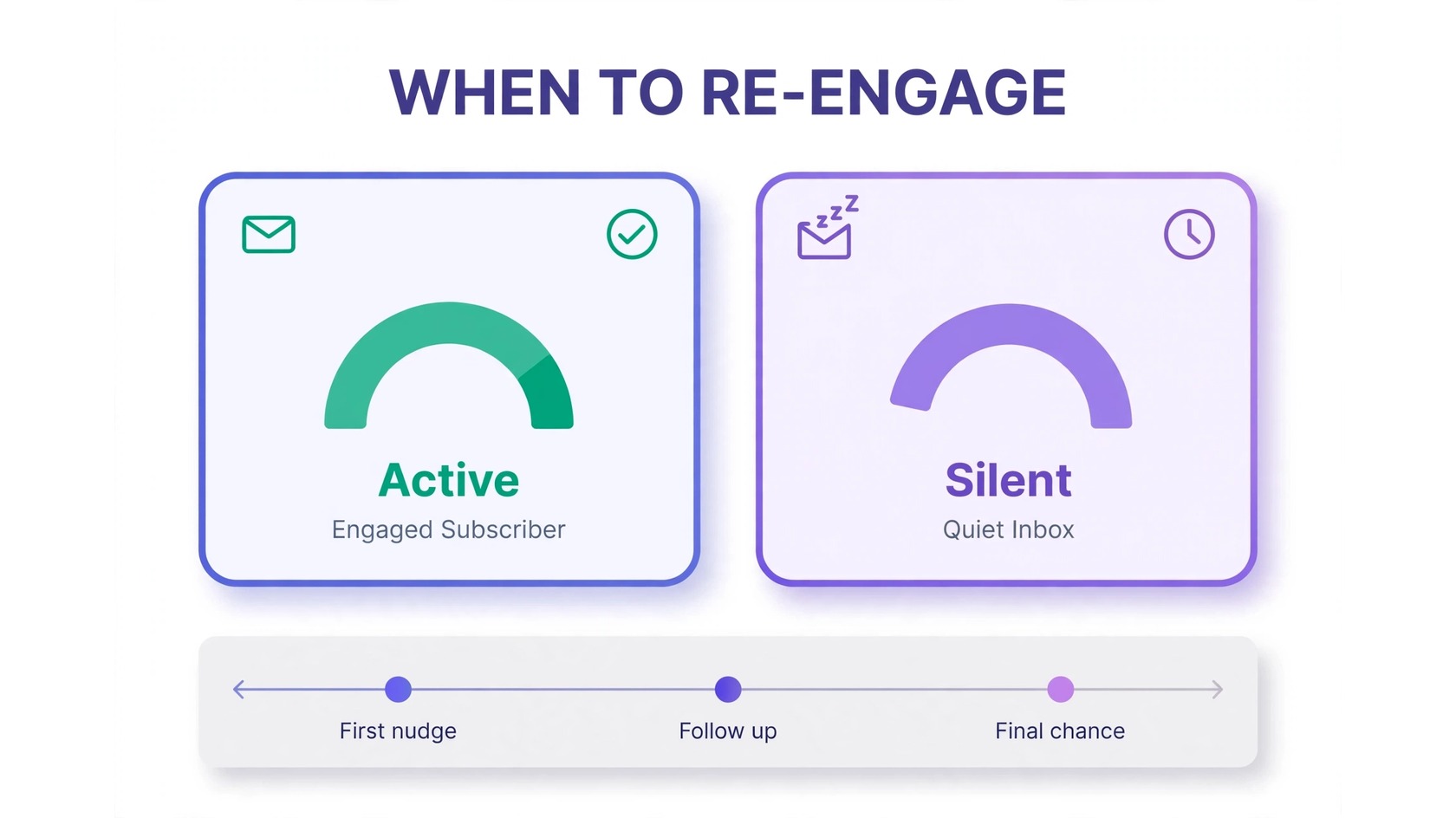
Timing decides whether your examples land or flop. Start by defining “inactive” for your sending frequency: 30 days of no opens for daily senders, 60 to 90 days for weekly senders, and up to six months for monthly senders. Apple Mail Privacy Protection has made open tracking less reliable, so consider blending in click and purchase data when you build the segment.
Once triggered, space the sequence over two to three weeks: email one immediately, email two after five to seven days, email three a week later, and the breakup email last. Do not run win-back campaigns during your normal promotional blasts, or the messages compete with each other. And watch your overall engagement trend while the sequence runs. If your open rate dropped suddenly, a re-engagement push alone will not fix a deeper deliverability problem, so diagnose first. For broader context on keeping your program healthy, Sender.net’s email marketing resources cover list health fundamentals in depth.
What to Do With Subscribers Who Never Respond
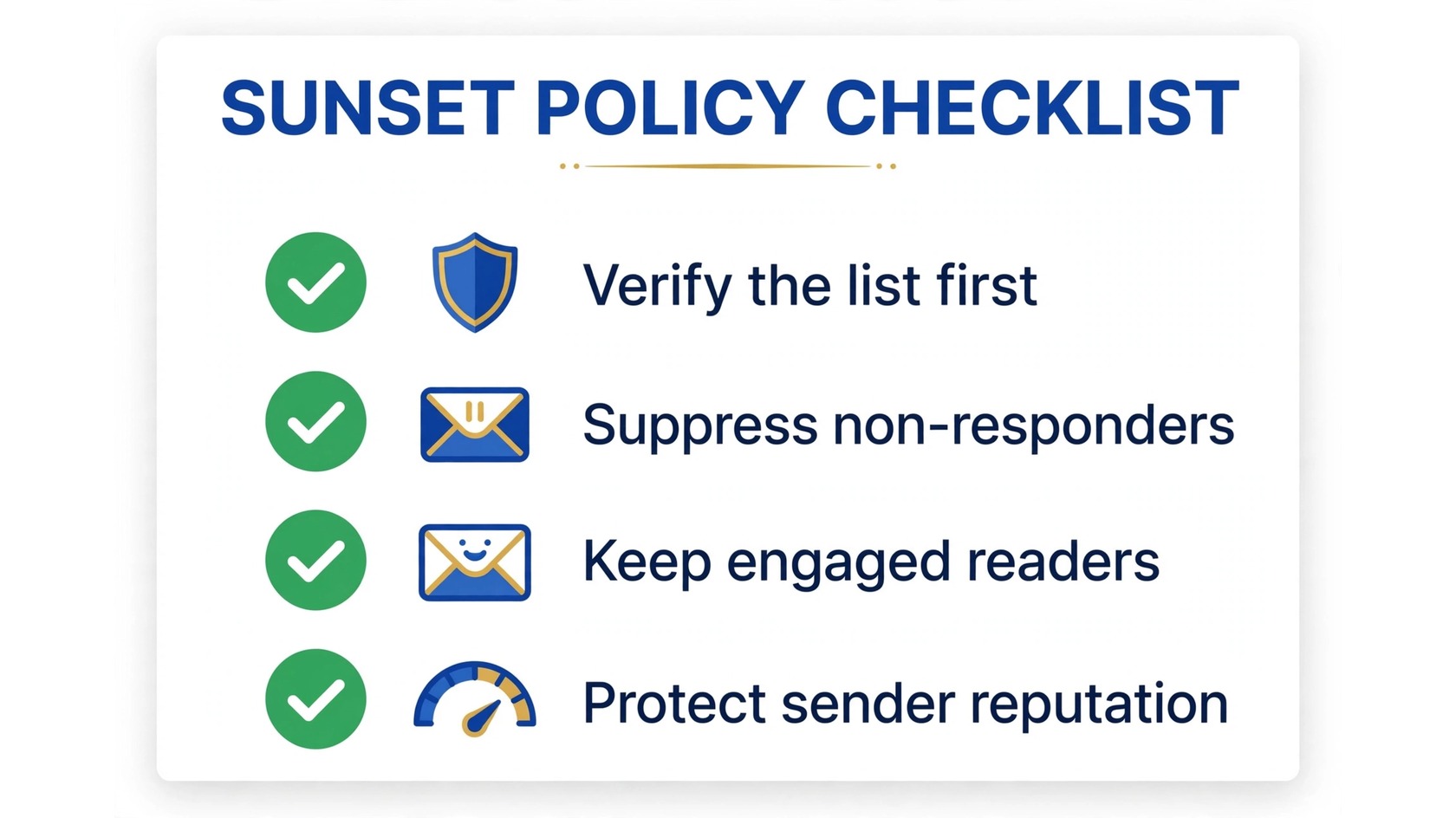
Some subscribers will ignore the entire sequence, and that is useful information. Continuing to mail chronic non-openers hurts you: mailbox providers interpret persistent non-engagement as a spam signal, which drags down inbox placement for your active readers too. This is where a sunset policy comes in. After the breakup email goes unanswered, suppress those addresses from regular campaigns.
Before you suppress anyone, verify the list. A surprising share of “inactive” addresses are actually invalid: role changes, abandoned inboxes, and typos that never engaged in the first place. Running your sunset segment through email verification first separates the truly disengaged (real people who lost interest) from the undeliverable (addresses that were never going to respond). Removing hard bounces and invalid addresses before you suppress protects your sender reputation and keeps your list metrics honest. If bounces are part of why engagement fell, our guide on why outreach emails bounce walks through the common causes. Mailercloud’s blog is another solid reference for list hygiene practices.
Frequently Asked Questions
What is a re-engagement email campaign?
A re-engagement email campaign, also called a win-back campaign, is a short automated sequence sent to subscribers who have stopped opening or clicking your emails. Its purpose is to win back attention with relevant offers or content, and to identify subscribers who should be removed. Most sequences run three to five emails over two to three weeks and end with a clear stay-or-go choice.
When should I send re-engagement emails?
Send them once a subscriber meets your definition of inactive, which depends on your frequency: roughly 30 days for daily senders, 60 to 90 days for weekly senders, and up to six months for monthly senders. Do not wait a full year. By then, the subscriber has forgotten you entirely and the address may have decayed into a spam trap risk.
How many emails should be in a win-back sequence?
Three to five emails is the sweet spot. Fewer than three rarely gives enough angles to catch someone’s interest; more than five starts to feel like pestering. Always end with a breakup email that asks directly whether they want to stay. The sequence should run over two to three weeks, not months.
Do re-engagement emails hurt deliverability?
Done right, they help it. Mailing to engaged subscribers and removing chronic non-openers improves your engagement metrics, which mailbox providers reward. What hurts deliverability is continuing to blast unresponsive addresses indefinitely, or sending win-back emails to invalid addresses that hard-bounce. Verify the segment first and suppress non-responders after the sequence.
Should I offer a discount in every re-engagement email?
No. Discounts work, but training subscribers to expect a coupon every time they go quiet creates perverse incentives. Use incentives sparingly, once or twice a year per subscriber at most, and mix in non-monetary angles like exclusive content, early access, or a personal check-in. Variety keeps the sequence from feeling like a coupon drip.
What is a sunset policy?
A sunset policy is your rule for when to stop emailing unresponsive subscribers. A common version: after a subscriber ignores a full re-engagement sequence, suppress them from regular campaigns. Some brands delete the addresses outright; others keep them for rare announcements. Either way, the policy should be written down, automated, and applied consistently.
How do I clean my list after a re-engagement campaign?
Start by removing hard bounces and invalid addresses, since they damage your sender reputation with every send. Then suppress the non-responders identified by your win-back sequence. Finally, run the remaining list through an email verification service to catch risky addresses like catch-alls and disposable domains. PureListVerifier handles bulk verification so your next campaign goes only to real, reachable inboxes.
The bottom line
Re-engagement is not about tricks. It is about giving silent subscribers a genuine reason to return, then respecting their answer. Use the nine examples above as a menu, build a short sequence around the three or four that fit your brand, and always end with an honest breakup email. Then clean up: verify what is left, suppress what is not, and watch your engagement metrics recover.
Ready to make sure your win-back emails reach real inboxes? See PureListVerifier pricing and verify your list before your next re-engagement campaign goes out.