Disposable Email Checker: How to Detect Temporary & Fake Signups (2026 Guide)
October 12, 2026
Quick answer
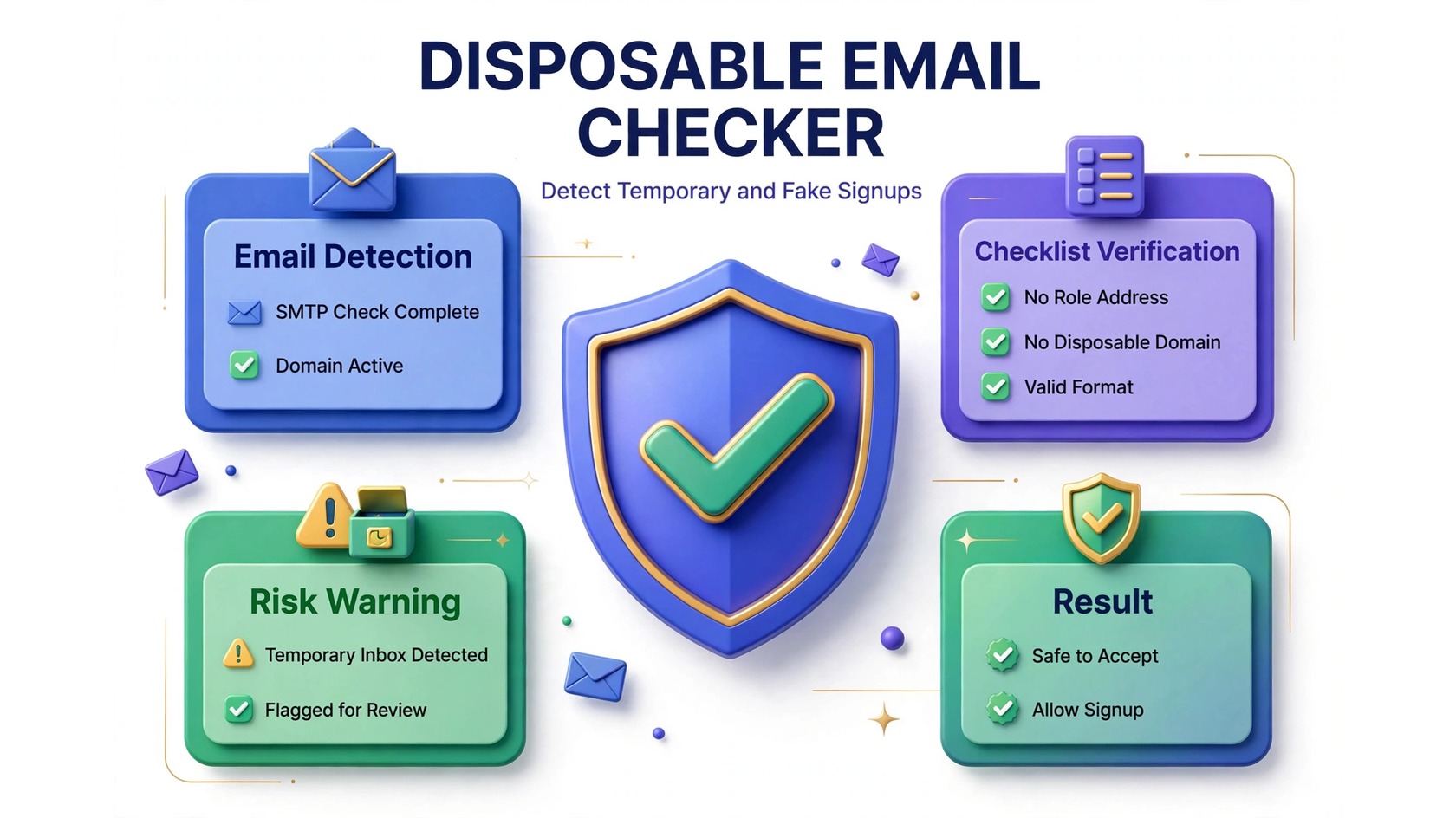
A disposable email checker is a tool that detects temporary email addresses created through throwaway email services. These addresses, generated in seconds by sites offering short-lived inboxes, let visitors sign up for your forms, trials, and lead magnets without ever giving you a real inbox. A reliable checker flags these addresses in real time, so you can block or quarantine them before they pollute your list.
In this 2026 guide, you will learn what disposable emails are, why they quietly damage deliverability and analytics, how detection works, and the practical steps that keep temporary signups off your list for good. New to the topic? That guide covers the fundamentals of email verification.
What Is a Disposable Email Address?
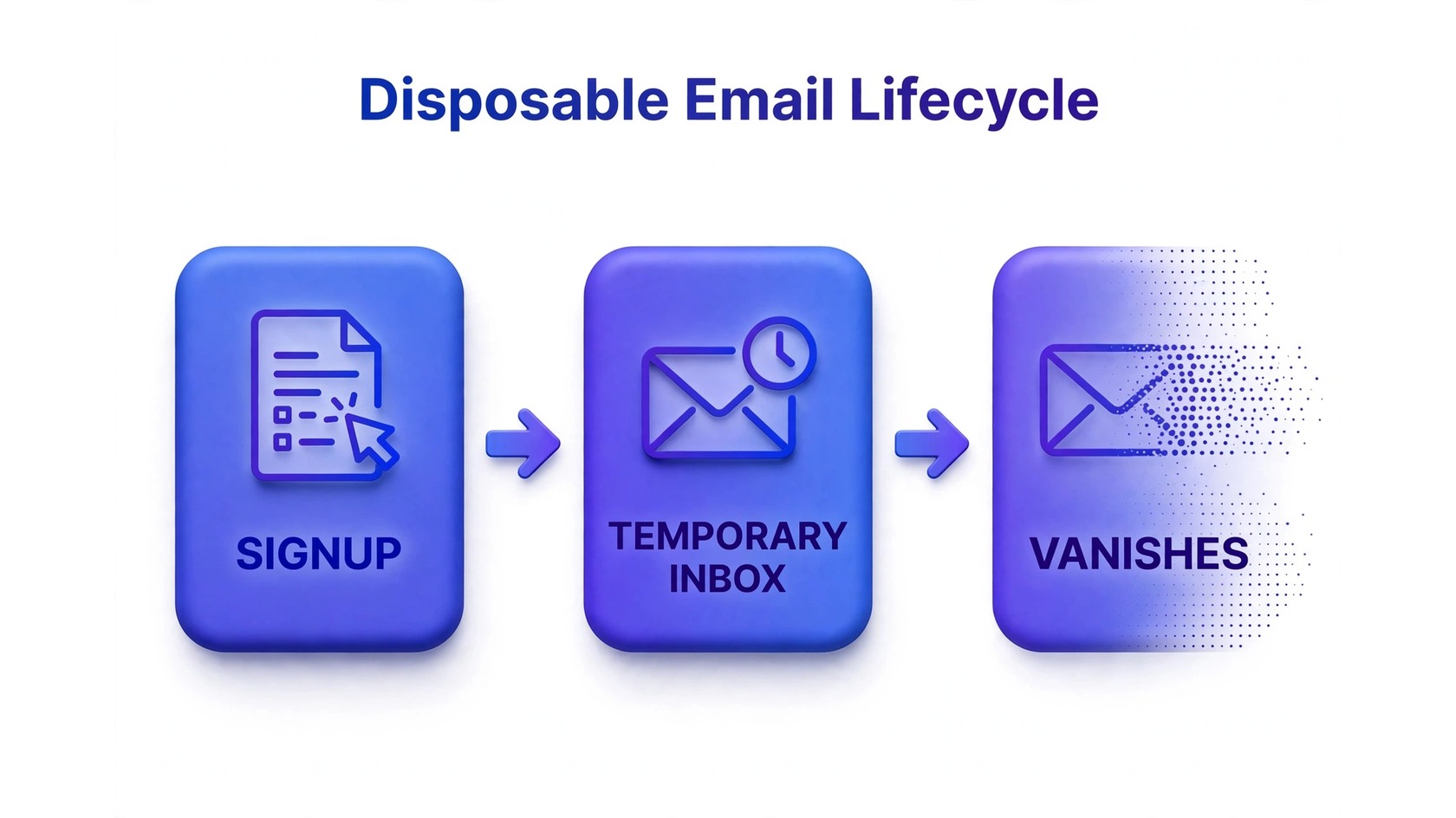
A disposable email address is a temporary inbox created for short-term use and then abandoned. Services that provide them generate a random address, display any mail that arrives for a limited window, and then delete everything. The whole process takes seconds and usually requires no registration at all.
People use them for understandable reasons. Nobody wants another newsletter they cannot easily escape, and a throwaway inbox feels like a privacy shield when a site demands an email address before showing a price or a download. But from a sender’s perspective, every one of these addresses is a dead end. Nobody reads what you send there, nobody clicks, and nobody converts.
It helps to distinguish a disposable address from a merely fake one. A fake address never existed and will hard bounce on the first send. A disposable address is technically real for a short time, which means it can pass a basic syntax check and even receive your welcome email, then vanish. That short-lived validity is exactly what makes dedicated detection necessary. Basic verification and validation checks catch formatting problems, but you need a disposable-specific layer to catch the intent behind the signup.
Why Disposable Emails Hurt Your Email List
The damage is quiet but compounding. Here is what they do to an unchecked list:
They inflate your list with ghosts. Every temporary signup counts toward your subscriber total and your sending volume, but contributes nothing. Your list looks bigger than it is, while every campaign pays to mail inboxes nobody owns.
They wreck engagement metrics. Open rates, click rates, and conversions all drop when a growing share of your audience cannot physically engage. Worse, the numbers mislead you. You might redesign a campaign that was actually fine, chasing a problem caused by dead addresses rather than weak content.
They turn into hard bounces. Disposable domains eventually expire or get shut down. When that happens, addresses that once accepted mail start bouncing hard. A sudden wave of hard bounces is one of the fastest ways to get blocklisted or throttled by mailbox providers.
They attract abuse. Throwaway inboxes are a favorite tool for trial abuse, fake reviews, and spam complaints filed from addresses with no reputation at stake. A list heavy with disposable signups tends to generate more complaints per send, which drags down sender reputation for everyone else on the list too.
They waste money. Most email platforms charge by contact or by send. Paying to store and mail addresses that were never real is pure overhead. Cleaning them out is one of the simplest cost cuts in email marketing, and our guide to the cheapest email verification tools shows how affordable that cleanup can be.
How a Disposable Email Checker Works
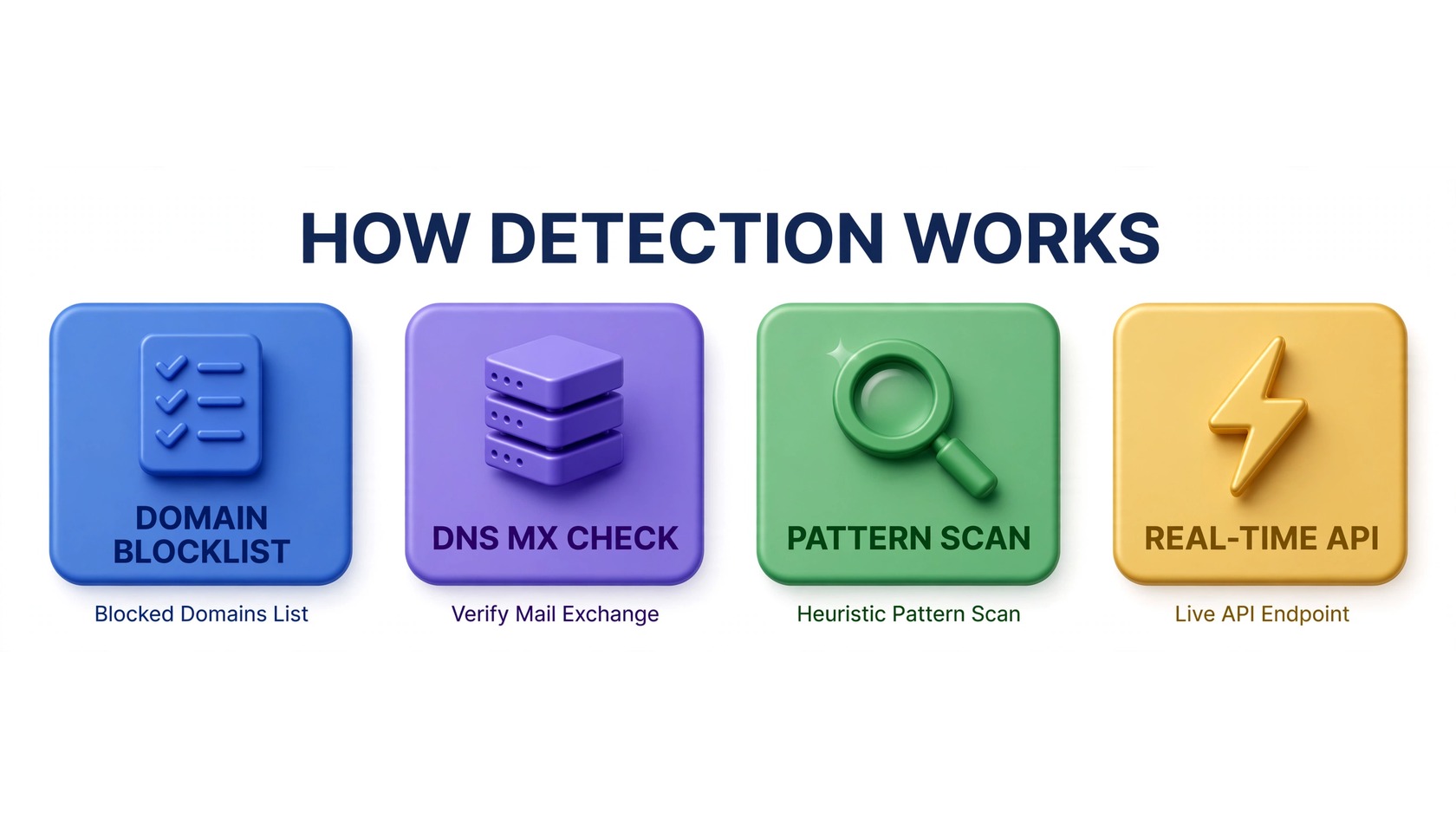
A disposable email checker combines several detection methods, because no single signal catches every temporary address. Here is what happens when an address is checked:
1. Domain blocklist lookup. The checker maintains a constantly updated database of known disposable email domains, numbering in the thousands. If the address’s domain appears on the list, it is flagged instantly. This is the fastest and most reliable signal, but it only works if the database is maintained aggressively, because new throwaway domains appear regularly.
2. DNS and MX record analysis. The checker queries the domain’s DNS records. Many disposable services use distinctive mail server setups, missing or unusual MX records, or infrastructure shared across hundreds of throwaway domains. These fingerprints give away addresses even when the exact domain is not yet blocklisted.
3. Pattern and heuristic detection. Some generators create addresses with recognizable patterns, such as random character strings or sequential numbering. Heuristic rules score these patterns and flag the most suspicious ones for closer inspection.
4. Real-time API verification. The best checkers expose all of this through an API you call at the moment of signup. Instead of discovering disposable addresses weeks later during a list cleaning, you catch them at the gate, before they ever enter your database. For a deeper look at how these tools compare overall, see our roundup of the best email verification tools.
The key point is that disposable detection is a living process, not a one-time filter. Throwaway services evolve, new domains launch, and old ones die. A checker is only as good as its last update, which is why maintained tools consistently outperform a static blocklist downloaded years ago and never refreshed.
7 Ways to Detect Temporary and Fake Signups
You do not need to accept disposable signups as a cost of doing business. These seven methods, from simplest to most robust, give you a layered defense:
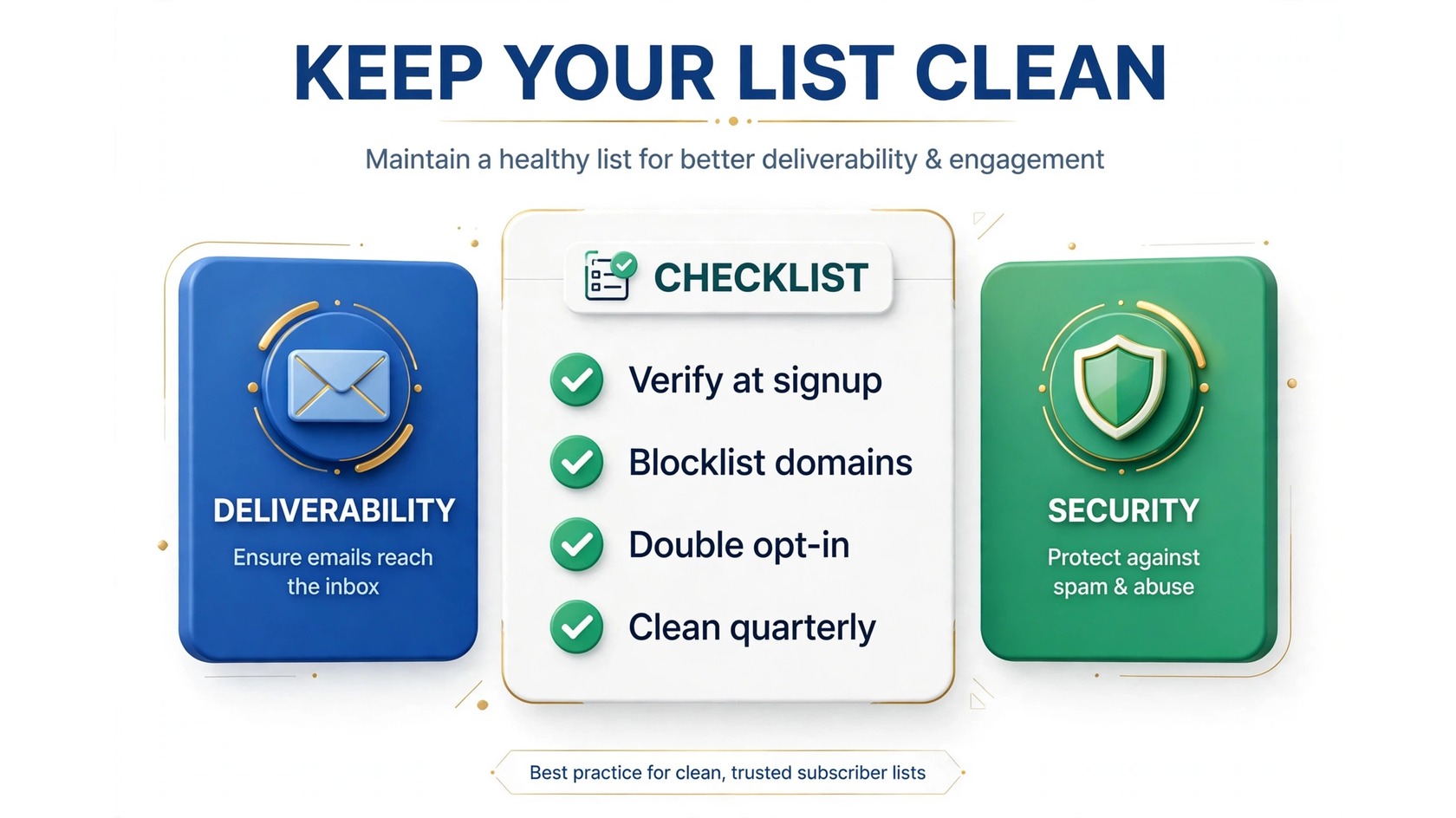
1. Verify emails in real time at signup. This is the single highest-leverage move. A verification API with disposable detection runs each address through its checks in under a second, while the visitor is still on your form. Flagged addresses can be rejected with a polite message asking for a permanent email, which legitimate users will happily provide.
2. Maintain a disposable domain blocklist. If you cannot use a real-time API yet, start with a blocklist. Public lists of disposable domains are widely available. Check each signup’s domain against the list and reject matches. Update the list regularly, since it decays fast as new throwaway services launch.
3. Inspect MX records for suspicious domains. A quick DNS lookup tells you whether a domain can even receive mail. Domains with no MX records, or MX records pointing at known throwaway infrastructure, deserve rejection or at least quarantine until verified another way.
4. Watch for pattern red flags. Addresses with long random character strings before the @ sign paired with unfamiliar domains after it are worth a second look. So are bursts of signups from the same obscure domain within minutes. Neither pattern proves an address is disposable, but both justify running it through a checker.
5. Track engagement from day one. Legitimate subscribers open, click, or at least receive mail. Disposable addresses go dark immediately. A simple rule, such as flagging any address with zero engagement after the first few sends, surfaces temporary signups that slipped through your front door.
6. Use double opt-in for risky segments. Requiring new subscribers to confirm through a link sent to their inbox stops most disposable addresses cold, because the throwaway inbox is often abandoned before the confirmation arrives. You do not need double opt-in everywhere, but it is a strong filter for high-risk forms like free-trial signups.
7. Clean your list on a schedule. Even with front-door defenses, some temporary addresses will get through. A periodic full-list verification catches them, along with the other decay every list accumulates: role addresses gone stale, abandoned inboxes, and mistyped domains. Quarterly cleaning is a sensible baseline for most senders.
Independent roundups such as Sender.net’s tested comparison of verification tools can help you evaluate which services include strong disposable detection before you commit to one.
What to Do When You Find Disposable Addresses
Detection is only half the job. What you do with flagged addresses matters just as much, and the blunt approach of deleting everything immediately is not always the smartest one.
Suppress, don’t just delete. Keep a suppression list of confirmed disposable addresses. If you delete them outright, the same throwaway address can sign up again next week and cost you another verification. A suppression list blocks re-entry permanently.
Segment before you purge. Not every flagged address is equally worthless, and a small number of flags will be false positives. Give flagged addresses one chance through a re-confirmation campaign before removing them, so a legitimate user who used a temporary address for privacy gets an opportunity to provide a permanent one.
Fix the form, not just the list. If one signup source produces far more disposable addresses than others, the problem is upstream. A form offering an irresistible freebie with no friction will always attract throwaway signups. Adding gentle friction, a CAPTCHA, a required company field for B2B, or a real-time checker, cuts the problem at its source.
Monitor your disposable rate over time. Track what percentage of new signups get flagged each month. A sudden spike often signals something specific: a new traffic source, a promotion being shared on deal forums, or a bot attack. The metric turns disposable detection from a chore into an early-warning system for your whole acquisition funnel.
Frequently Asked Questions
What is a disposable email checker?
A disposable email checker is a tool that identifies temporary email addresses created through throwaway email services. It typically combines a database of known disposable domains with DNS analysis and heuristic checks. Many work in real time through an API, catching questionable signups at entry instead of weeks later.
Are disposable email addresses illegal?
No. Using a temporary email address is legal in virtually every jurisdiction. These addresses are a privacy tool as much as an abuse tool. That is why most senders choose to filter or quarantine them rather than treat them as hostile, and why giving users a clear path to provide a permanent address works better than a silent block.
Can I block all temporary emails at signup?
You can block the vast majority by combining a real-time disposable check with a maintained domain blocklist. No method catches one hundred percent, because new throwaway domains appear constantly, but a layered approach gets close enough that routine list cleaning handles the remainder.
Do disposable email checkers catch every temporary address?
No checker catches everything. The best ones catch the overwhelming majority by pairing large, frequently updated domain databases with DNS fingerprinting and pattern heuristics. The remaining gap is exactly why periodic re-verification of your existing list matters: it catches what the front door missed.
What is the difference between a disposable email and a fake email?
A fake email address never existed and will always bounce. A disposable address is real but temporary: it works for a short window and then disappears. That temporary validity lets it slip past basic syntax checks, which is why disposable-specific detection exists as its own layer on top of standard verification.
Will blocking disposable emails hurt legitimate signups?
Rarely, if you do it thoughtfully. Reject flagged addresses with a friendly message asking for a permanent email address, and genuine users will comply. The small friction is worth it: every disposable address you keep costs you sends, skews your metrics, and risks hard bounces when its domain eventually dies.
How often should I check my list for disposable addresses?
Check new signups in real time, every time. For your existing list, run a full verification including disposable detection at least quarterly, and monthly if you grow fast or run frequent promotions. Lists decay continuously, so cleaning is maintenance, not a one-time project.
The bottom line
Disposable email addresses are a quiet tax on every list that ignores them: inflated counts, misleading metrics, hard bounces, and wasted spend. A disposable email checker removes that tax by catching temporary signups at the door and cleaning up the ones already inside. Pair real-time detection with scheduled list maintenance, and temporary addresses stop being a problem you manage and become a problem you solved.
Ready to find out how many disposable addresses are hiding in your list? Try PureListVerifier and see what a clean list actually looks like.